
TL;DR
An ornamental iron fence in Austin is the longest-lasting residential fence option, with a 30 to 50-year lifespan when properly maintained. It costs more upfront than wood or chain link (typically $35 to $70 per linear foot installed), but the maintenance load is light, and the resale appeal is high. Iron works best for properties where curb appeal, durability, and an open view matter more than privacy. The guide below covers the real material differences (wrought iron vs aluminum vs steel), common Austin styles, how iron handles Texas weather, what to budget for, and the cases where it isn’t the right pick.
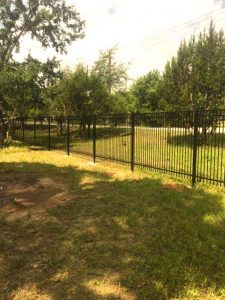
Walk through any older Austin neighborhood,d and you’ll see them: dark, vertical iron fences with spear tops, often paired with limestone columns or set in a stone wall base. These are ornamental iron fences, and they’ve been the high-end residential choice for over a century. This guide is for Austin homeowners considering iron as a serious option. We’ll cover what ornamental iron actually is, the real differences between wrought iron, aluminum, and steel, how each holds up in Texas weather, what the cost ranges look like locally, and when iron is genuinely the right choice versus when another material would serve you better. We’ll also work through how iron stacks up against privacy fencing, which is the most common comparison homeowners make.
What ornamental iron is, and what it isn’t
“Ornamental iron” is a broad term that covers any decorative metal fencing system with vertical bars (called pickets), horizontal rails, and decorative elements like spear tops, scrolls, or finials. The defining trait: the fence doesn’t fully block sightlines. You can see through it, which is the whole point. The pickets are spaced 4 to 6 inches apart to create a clear visual rhythm without obstructing the view.
What it isn’t:
- It isn’t a privacy fence. If you want to block neighbors’ sightlines, this isn’t the material. The open picket design is a feature, not a flaw.
- It isn’t necessarily made of iron. The term “ornamental iron” is mostly stylistic at this point. Modern “iron” fences may be made of true wrought iron, steel, or aluminum. Each performs differently.
- It isn’t the same as chain link. Both are metal fences, but ornamental iron is decorative and structural. Chain link is utilitarian. They serve different purposes and look completely different on a property.
Wrought iron vs aluminum vs steel: the real differences
The visible style can look identical across all three, but how they actually perform differs significantly. Here’s the practical breakdown:
True wrought iron
Genuine wrought iron is the original material: hand-forged, low-carbon iron with a fibrous internal structure that resists rust differently than modern alternatives. It’s heavy, expensive, and rarely used for new residential fences anymore because most production has shifted to steel. If you see “wrought iron” in a new installation, it’s usually a stylistic term referring to forged steel that mimics the look. True wrought iron is found mostly in historic restorations.
Steel (the most common “iron” fence today)
Most ornamental iron fences sold today are actually steel. Steel is stronger than aluminum, holds intricate forged details well, and accepts powder coating effectively. The trade-off: steel will rust if the coating fails. In Austin’s humidity, that means rust touch-ups every few years on a typical install. Steel works well for tall fences, gate frames, and properties that need real strength (think large dogs, security concerns, or wind-prone areas).
Aluminum
Aluminum has gained ground in the last 20 years because it doesn’t rust. It’s lighter, easier to install, and requires far less maintenance than steel. The visual look is nearly indistinguishable from steel when both are powder-coated. The trade-offs: aluminum bends more easily under impact (think tree branches in a storm), and the strongest aluminum systems still cost about the same as mid-grade steel. For most Austin homeowners, aluminum is the practical default unless they specifically want the heft of steel.
Material | Rust risk | Strength | Best use case |
|---|---|---|---|
True wrought iron | Low to moderate | High | Historic restoration |
Steel | Moderate (needs coating maintenance) | Highest | Tall fences, gates, and security-focused |
Aluminum | None | Moderate | Low-maintenance residential |
Common ornamental iron fence styles in Austin
Styles vary by neighborhood, era, and HOA. A few that show up most often:
Spear top (also called pressed point)
Each picket ends in a flattened or forged spear shape. The most classic look, common in older Austin neighborhoods and traditional home styles. Adds a security element since the points discourage climbing.
Flat top (or smooth top)
Cleaner, more modern look without decorative tops. Pickets are cut flat at the top rail. Works well with contemporary homes and meets pool fence code in most cases (more on this below).
Scroll top and ornate
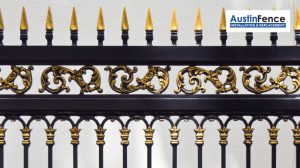
Decorative scrollwork between or above the pickets. Common in higher-end residential installs, often paired with masonry columns. This is the look most people picture when they hear “wrought iron fence.”
Custom panels
Forged designs are incorporated between pickets, often custom-made for a specific property. Driveway gates frequently feature these custom panels. Cost rises significantly when designs are one-off.
How iron handles Austin’s humidity, heat, and storms
Austin’s climate puts specific pressures on iron fencing:
Humidity and rust
Steel fences here will eventually rust if the protective coating fails. The pattern is predictable: small rust spots appear at welds, scratch points, and ground contact within 5 to 10 years. Caught early, these are 30-minute touch-ups. Ignored, they spread. Aluminum sidesteps this problem entirely. For a broader context on metal corrosion, see fence rot causes and prevention (the principles apply to metal degradation too).
Heat and UV exposure
Iron handles heat better than almost any other fence material. Powder-coated finishes are UV-stable and don’t fade or peel like paint. Boards don’t warp, panels don’t sag, and gate alignment stays consistent across seasons. This is one of iron’s strongest selling points for Austin.
Storms and wind
Iron’s open picket design lets wind pass through, which means it handles storms better than solid privacy fences. Damage from falling tree branches is the main risk, especially for aluminum. Recovery is straightforward: damaged pickets or panels can be replaced individually without disturbing the rest of the fence.
Hail
Austin’s occasional hailstorms can damage powder coating on steel and dent aluminum pickets. Cosmetic damage rarely affects function, but it can be a factor in insurance claims. For context on storm decisions, see storm-damaged fences in Austin: repair or replace?.
For broader material-climate matching, see the best fence materials for Austin’s climate and long-lasting fence materials for Austin.
Maintenance: what’s actually required
Iron is one of the lower-maintenance residential fence materials. The realistic schedule:
Annually
- Walk the fence line. Look for rust spots, loose hardware, gate alignment drift, and damage from storms or tree branches.
- Check gate hinges and latch mechanisms. Lubricate as needed.
- Wash the fence with a garden hose and mild detergent to clear dust and pollen.
Every 3 to 5 years
- Touch up any rust spots on steel fences. Light sanding, primer, and color-matched paint.
- Check the tightness of post connections to footings.
Every 15 to 20 years
- Consider a full repaint on steel fences if cosmetic decline is widespread.
- Aluminum fences typically need no repainting in their entire service life.
What does an ornamental iron fence cost in Austin
Pricing varies by material, height, picket spacing, decorative complexity, and gate count. Typical ranges for residential installations in the Austin metro:
Type | Typical cost per linear foot (installed) | What’s included |
|---|---|---|
Aluminum, standard residential | $35 to $55 | Posts, panels, basic installation. Spear or flat top. |
Steel, standard residential | $45 to $70 | Posts, panels, basic installation. Heavier construction. |
Steel with custom panels or scrollwork | $80 to $150+ | Custom forged design adds significantly to materials and labor. |
Driveway gate (automated) | $5,000 to $15,000+ per gate | Frame, motor, sensors, keypad, or remote. Separate from per-foot pricing. |
Cost factors that often surprise homeowners: pier-and-beam concrete footings for posts, masonry column construction if paired with stone, and the premium for matching gate hardware. For a detailed comparison against other materials, see the long-term costs of wood, vinyl, and iron fences in Austin.
Pairing iron with masonry or other materials
One of the most common Austin installations isn’t pure iron, it’s iron combined with limestone, brick, or stucco. The basic setup: masonry columns at fixed intervals (typically 8 to 12 feet apart) with iron panels between them. Sometimes there’s also a low masonry wall along the bottom, 12 to 24 inches.
Reasons homeowners pair iron with masonry:
- Aesthetic. Stone columns dress up the look and tie the fence to the house architecture.
- Privacy at the base. A low masonry wall blocks ground-level views (small pets, garden beds) while iron keeps the open sightline above.
- Property line definition. Masonry columns work well as visual property markers, especially at corners.
Trade-off: pairing adds high cost. Masonry columns alone can run $800 to $2,500 each, depending on materials and design. A typical front yard with 6 to 8 columns plus iron panels easily doubles the cost of pure iron fencing.
Ornamental iron vs privacy fence: which to choose
This is the most common comparison Austin homeowners make, and the answer comes down to what you want the fence to do.
Need | Better fit: ornamental iron | Better fit: privacy fence |
|---|---|---|
Blocking neighbor views | No (open picket design) | Yes (solid panels) |
Curb appeal / front yard | Yes, especially with masonry | Usually no (HOAs often restrict) |
Long lifespan (30+ years) | Yes (with light maintenance) | No (15 to 20 years typical) |
Pet containment | Depends on pet size and picket spacing | Yes (better for small dogs, especially) |
Lower upfront cost | No | Yes |
Low maintenance | Yes (aluminum especially) | No (staining, repairs ongoing) |
Open view preservation | Yes | No |
Many Austin properties use both. Ornamental iron in the front yard for curb appeal, privacy fencing in the back for the actual privacy work. This is the most common high-end residential setup.
When ornamental iron isn’t the right choice
A few cases where another material is better:
- You need privacy. This is the obvious one. Open picket design and privacy are mutually exclusive. Wood, vinyl, or composite is the right call.
- You have small pets or escape artists. Small dogs, cats, or curious larger dogs may slip between standard iron pickets (4 to 6 inch spacing). Tighter picket spacing is possible, but it adds cost. See chain link, wood, and iron fences for pets in Austin for material comparisons by pet type.
- Your budget is tight. Iron costs more than wood or chain link, both at installation and for any custom decorative work. If the budget is the constraint, wood or chain link does the basic job at lower cost.
- Your HOA explicitly requires wood. Some Austin HOAs require wood for residential properties. Check before committing. See HOA fence rules in Austin.