
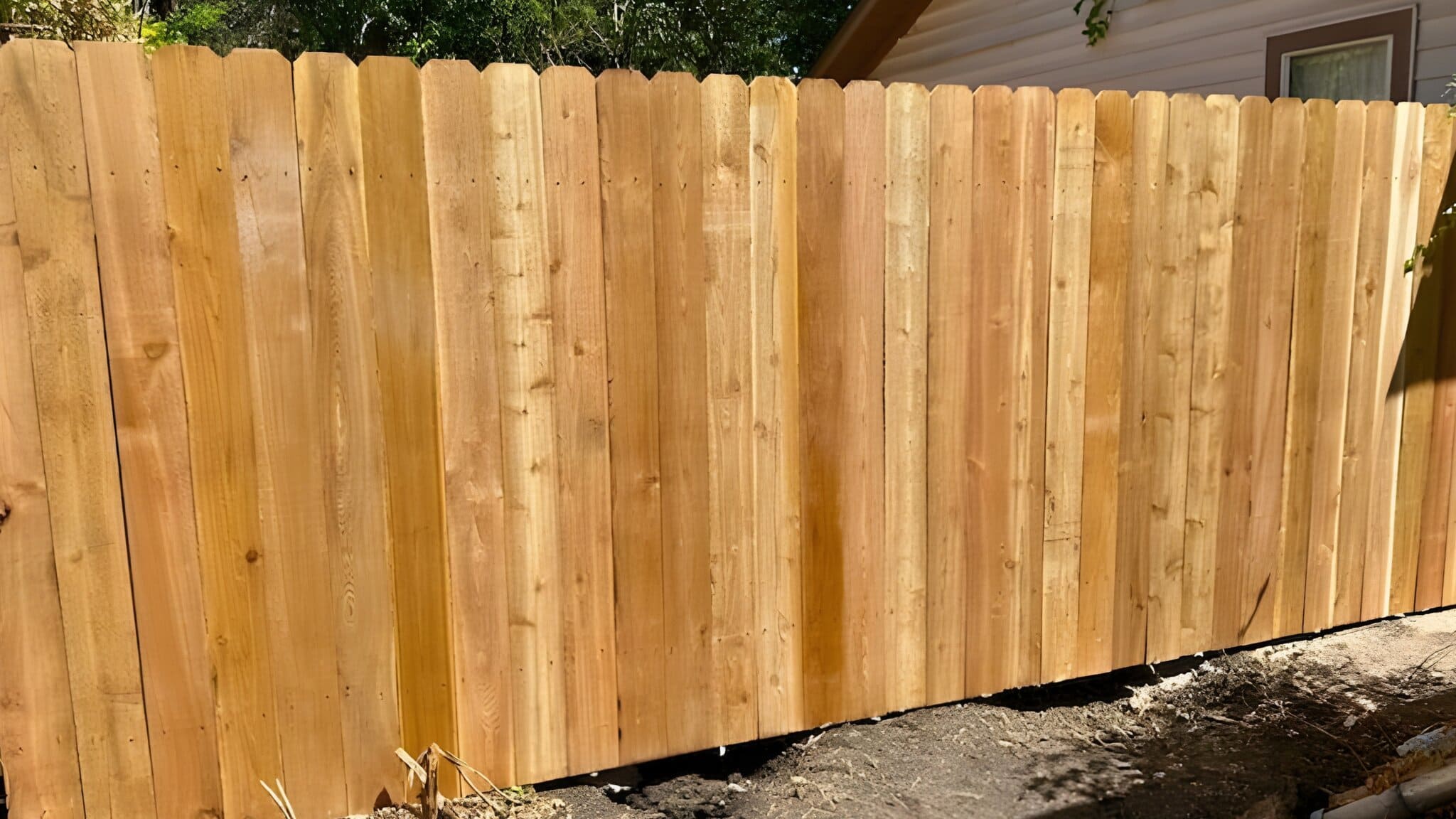
A wood fence that looks perfect on installation day can look completely different twelve months later, and most homeowners are surprised by how fast that happens. The wood grain opens up, the color fades, and in some cases the boards start to cup or check along the surface. Whether a fence holds up well or deteriorates quickly depends less on the wood species and more on what happens after the posts go in. That is where the real variation between customers starts to show, and where a contractor’s ability to read a specific situation matters more than any standard process.
What Makes One Job Easier Than Another
The single biggest factor is the condition of the wood at the time of service. New cedar that has been allowed to dry for three to four weeks absorbs a penetrating stain at a consistent rate. The contractor controls the outcome. Old wood that has been left untreated for two or three years is a different story. The surface layer has weathered, the grain has raised, and in some spots the wood has gone gray from UV exposure. Before any product goes on, that surface has to be cleaned and sometimes lightly sanded or treated with a wood brightener to open the grain back up. That prep work adds time and cost, typically $0.50 to $1.00 per linear foot on top of the base application price, and skipping it produces a blotchy result that peels within a year.
Fence height and accessibility change the math too. A standard six-foot privacy fence along a flat yard is the baseline. Add a slope, a retaining wall on one side, or a gate that can’t be removed, and the crew is working around obstacles instead of moving steadily down a run. Austin Fence Pros notes that jobs where access is limited on both sides of the fence consistently take 30 to 40 percent longer than comparable jobs with open access, and that time has to be priced honestly upfront rather than absorbed as a surprise.
The Decisions That Happen Before Any Product Is Applied
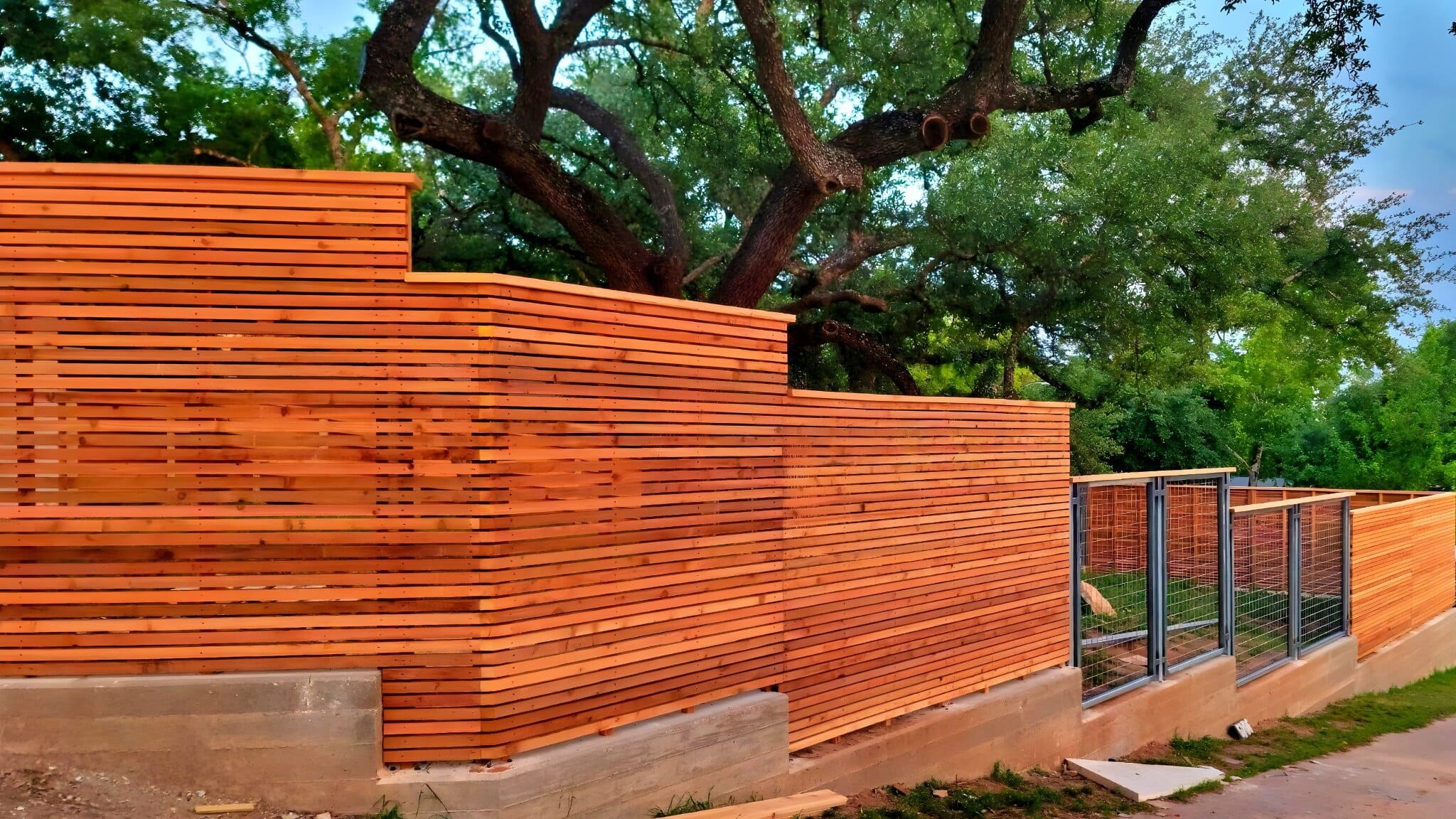
Product selection is where a lot of contractors cut corners, and customers rarely know it until the finish starts to fail. There is a meaningful difference between a film-forming stain and a penetrating oil-based product. Film-forming products sit on top of the wood and look great for the first year. When they fail, they peel in sheets and require stripping before anything else can go on. Penetrating products soak into the fiber, fade gradually rather than peeling, and can be recoated without stripping. For wood fences in the Bull Creek area of Austin, TX, where afternoon heat is intense and the sun angle is high, penetrating products almost always perform better over a three-to-five-year cycle.
Color matters more than most people expect. Darker tones absorb more heat and can accelerate checking in boards that are already stressed. Lighter semi-transparent tones let the grain show and keep surface temperatures lower. Austin Fence Pros recommends that customers with south-facing fence runs consider going one shade lighter than their first instinct, because the color reads darker once it is on a full panel in direct sun.
Where Customers Tend to Get Into Trouble
The most common mistake is waiting too long. A fence that gets its first coat of stain within sixty days of installation, once the wood has dried but before it has weathered, will hold that coat for three to five years with minimal maintenance. A fence that goes two or three years without any treatment often needs a full clean-and-prep cycle before it can be properly finished, which doubles the cost of the first application. The math strongly favors acting early.
Sprinkler systems are another recurring problem. Fence boards that get hit by irrigation spray on a regular schedule stay damp longer than the wood can properly handle. That moisture works against any finish, regardless of quality. Customers near Burnet Road and the neighborhoods running toward Mopac Expressway often have mature landscaping with irrigation systems that were installed before the fence, and redirecting a few heads before a staining job is worth far more than the five minutes it takes. A contractor who doesn’t mention this is leaving the customer set up for a shorter-than-expected finish life.
Proximity to parks and green spaces adds a specific wrinkle. Properties near natural areas like Mayfield Park and Nature Preserve or Covert Park at Mount Bonnell tend to have more shade, more moisture, and more biological growth on fence surfaces. Algae and mildew establish themselves faster on shaded boards, and a fence staining job on a property like that needs a mildewcide additive in the product mix, not just a standard penetrating stain. It is a small adjustment that makes a significant difference in how long the finish stays clean-looking.
How to Set a Job Up for the Best Result
Preparation on the customer’s side is straightforward but often overlooked. Clear vegetation away from the fence line before the crew arrives. Shrubs and vines pressed against boards trap moisture and prevent even application on the back side. Move patio furniture, grills, and anything stored along the fence to give the crew a clear working path. If there are pets, plan for them to be inside or in a separate area for the day, plus a few hours of dry time after the crew finishes.
Ask the contractor specifically what happens if it rains within 24 hours of application. A good answer involves a clear policy, not a vague reassurance. Most quality penetrating products need at least 24 hours of dry weather to cure properly, and a contractor who won’t commit to a re-application plan if that window gets broken is one to watch carefully.
Austin Fence Pros has been handling jobs across Bull Creek and the broader Austin, TX area long enough to have seen most of the variables that make one fence job different from another. If you have questions about your specific situation, reach out directly. Austin Fence Pros is located at 2005 Justin Ln Ste #101, Austin, TX 78757, and can be reached at (512) 354-7670.
Frequently Asked Questions
How does the condition of my wood affect the service you provide?
The condition of the wood is crucial; new cedar that has dried for three to four weeks absorbs treatment consistently, while old, untreated wood needs cleaning and potentially sanding, which adds time and cost. If the wood has weathered for two or three years, it often requires a full clean-and-prep cycle that can double the cost of the initial application.
What should I prepare before your crew arrives?
Clear vegetation away from the fence line to prevent moisture buildup and allow for even application. Also, move any patio furniture, grills, or items stored along the fence, and ensure pets are kept inside or in a separate area for the day, plus a few hours of dry time after your crew finishes.
What common mistakes should I avoid when scheduling your services?
A common mistake is waiting too long to treat the wood; applying treatment within sixty days of installation helps maintain the fence for three to five years with minimal maintenance. Additionally, neglecting to redirect sprinkler systems can lead to prolonged moisture exposure, which negatively impacts the finish.
How do you handle weather conditions during the job?
It’s important to ask about the contractor’s policy if it rains within 24 hours of application. Most quality penetrating products need at least 24 hours of dry weather to cure properly, so a contractor should provide a clear plan for re-application if that window is disrupted.
Get Directions to Austin Fence Pros
🎧 Listen to this as a podcast
Also on Apple Podcasts, Spotify, and Amazon Music.
