
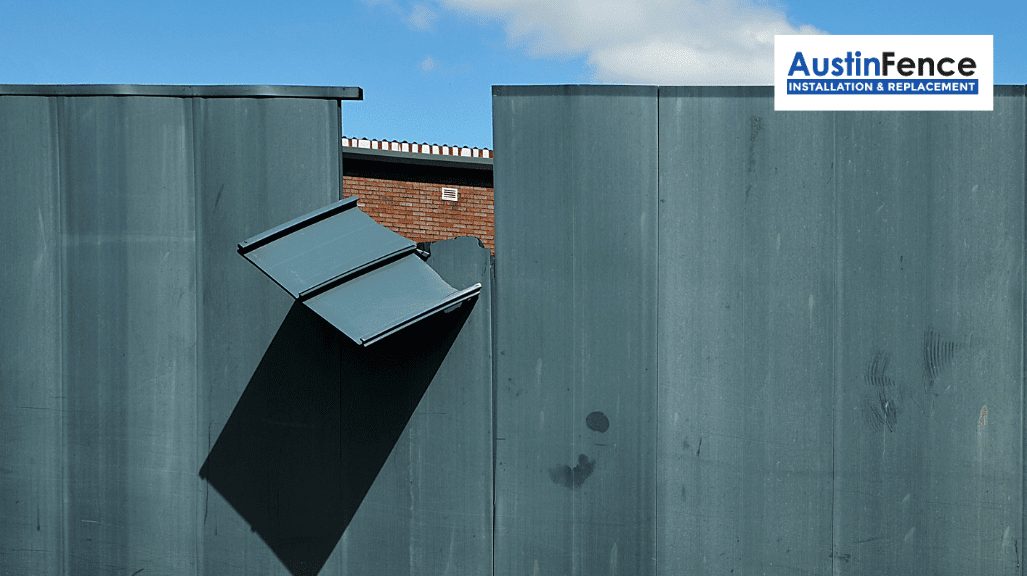
What is Structural Fence Damage?
Structural damage affects the fence’s strength and ability to function correctly. It can make your fence unsafe, reduce its lifespan, and even lower your property value.
Common signs of structural damage include:

- Leaning or unstable fence posts
- Large cracks or splits in wood boards
- Rusted or broken metal sections
- Sections of the fence are pulling away from posts.
- Gates that sag or won’t close properly
If left unaddressed, these issues can lead to complete fence failure, especially during Austin’s windstorms or heavy rains.
What is Cosmetic Fence Damage?
Cosmetic damage primarily affects the fence’s appearance rather than its functionality. While these issues are usually less urgent, they can still impact curb appeal and, if neglected, may develop into more significant problems.
Examples of cosmetic damage:
- Faded paint or stain
- Minor surface scratches
- Minor chips or dents in metal fences
- Weathered or discolored boards
- Mildew or surface dirt
Cosmetic issues are often repairable through maintenance tasks such as staining, repainting, or cleaning.
Key Differences Between Structural and Cosmetic Damage
Aspect | Structural Damage | Cosmetic Damage |
Impact | Affects safety and stability | Affects appearance only |
Urgency | Immediate attention required | Can be scheduled for maintenance |
Common Causes | Rot, rust, soil shifts, wind damage | Sun exposure, weathering, surface wear |
Professional Help | Almost always needed | Often DIY-friendly |
Common Structural Damage in Austin
Austin’s unique weather and soil conditions often cause these structural issues:
1. Leaning Posts
Clay-heavy soil expands during rainy periods and contracts during dry spells, loosening fence posts and causing them to lean.
2. Rot and Decay
Wood fences are especially vulnerable to rot due to Austin’s humidity and occasional storms.
3. Rusted Metal Sections
Metal fences, especially those without protective coatings, can develop rust that weakens their structure.
4. Broken or Missing Boards
Storms or strong winds can cause boards to snap or detach, compromising the fence’s stability.
Common Cosmetic Damage in Austin
While less severe, cosmetic damage is still typical in Austin:
1. Fading from Sun Exposure
Austin’s hot summers cause wood and paint to fade over time, making fences look aged and worn.
2. Staining and Mildew
Humidity can lead to mildew buildup on wood fences, especially in shaded areas.
3. Minor Surface Rust
Even galvanized or coated metal fences may develop small rust spots that require attention.
4. General Weathering
Seasonal changes can cause minor cracks or discoloration, which, although cosmetic, can worsen without proper maintenance.
How Austin’s Climate Impacts Fence Damage

Austin’s weather patterns can turn minor cosmetic issues into major structural ones:
- Heavy Rain: Saturates soil, weakening posts and encouraging wood rot.
- Intense Heat: Dries out wood, causing splits or cracks that expose the interior to moisture.
- High Winds: Stress already weakened sections, leading to structural failure.
- Occasional Freezes: Can cause soil to shift around posts and exacerbate leaning.
Regular inspections after significant weather events can help catch these problems early.
Step-by-Step Fence Damage Inspection Checklist
To keep your fence in top condition, follow this inspection process:
- Check Post Stability: Push each post lightly; if it wobbles, it may need reinforcement or resetting.
- Look for Rot: Examine the base of wooden posts and boards for soft or discolored spots.
- Inspect Hardware: Ensure screws, nails, and brackets are secure and rust-free.
- Examine Panels: Identify cracked, warped, or missing boards and replace them promptly.
- Assess Metal Fences for Rust: Check for corrosion, especially near welds and joints.
- Evaluate Gate Functionality: Ensure gates open and close smoothly without any dragging.
- Scan for Cosmetic Issues: Note fading, scratches, or surface mildew for future maintenance.
Completing this checklist twice a year—ideally in spring and fall—can prevent minor issues from becoming costly repairs.
How to Prevent Fence Damage Before It Becomes Structural
Taking preventive steps is the best way to avoid expensive fence repairs in Austin’s demanding climate:
- Apply Sealants: Protect wood fences from moisture and sun damage by applying yearly stains or sealants.
- Maintain Drainage: Ensure water doesn’t pool around fence posts.
- Trim Vegetation: Keep plants from growing against your fence, as this can trap moisture and accelerate decay.
- Address Minor Rust Early: Sand and paint over small rust spots before they spread.
- Schedule Regular Inspections: Proactivity is cheaper than emergency repairs.
When to Call a Professional

You should contact a professional if you notice:
- Multiple leaning posts or sagging sections
- Widespread rot or rust
- Gates that won’t open or close properly
- Any damage that compromises fence stability
Professionals can assess the full extent of the damage and provide long-lasting repair solutions tailored to Austin’s climate.