

TL;DR
Putting off fence repairs in Austin gets expensive fast. A loose post that costs $150 to fix today can turn into $800 of damage within a few months. Once damage spreads past 25 to 30 percent of the fence, you’re looking at full replacement instead of repair, which can mean thousands more in cost. Climate, soil movement, and the way fences fail as a system all push small problems into big ones. The numbers and seasonal checklist below show how to act early and save in the long run.
Understanding the cost of delaying fence repairs in Austin is the difference between a $200 invoice and a $2,400 one. Most homeowners notice a leaning post, a sagging gate, or a few rotting boards and decide to wait. The thinking goes: it’s not that bad yet, and the budget is tight. The problem is that fences are an interconnected system. One weak section pulls on the next, and Austin’s heat, humidity, clay soil, and storm cycles do the rest. This guide walks through what timely fence repair actually costs, what waiting costs, and where the line falls between repairable damage and full replacement.
Why timely fence repairs matter in Austin
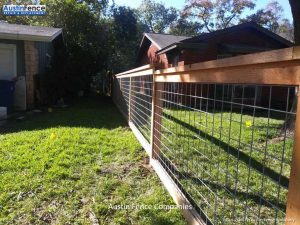
A fence is more than a property boundary. It’s a security measure, a privacy shield, a pet-containment system, and part of curb appeal. Every week it sits damaged, those functions slip a little. Specifically, putting off repair leads to:
- Escalating damage costs as small problems pull adjacent sections out of plumb.
- Structural instability that gets harder and more expensive to reverse.
- Reduced property value, especially noticeable when buyers pull up to a listing.
- Increased liability if a damaged section causes injury or contributes to a property dispute.
In Austin, where heat, humidity, and clay-heavy soil create constant pressure on fence structure, those factors compound faster than most homeowners expect. For a comparison of repair vs replacement decisions, see Fence Repair vs. Replacement in Austin.
How small fence issues become major problems
A single loose post or warped board looks harmless on its own. The catch is that fences operate as a connected system, and one weak section strains the rest. Common patterns:
- A leaning post pulls adjacent panels into a sag, putting stress on neighboring posts.
- Rust spreading across one section of a chain link fence eventually compromises terminals and gate frames.
- Rot in one or two boards of a wood fence wicks moisture into the post bases, accelerating broader decay.
- A damaged gate keeps yanking on its post, eventually pulling it out of alignment with the rest of the run.
Each of those starts as a single repair. Left alone, each becomes a section repair, and eventually a full replacement. For more on identifying which damage is structural versus cosmetic, see Identify Structural vs Cosmetic Fence Damage.
The financial impact of delaying repairs
Repair costs scale fast. A small vinyl fence repair caught early might run $150 to $250. Wait six months and you may be paying for:
- Multiple post replacements instead of one.
- Entire panel swaps where boards used to be salvageable.
- Gate rehanging or full gate replacement.
Stretched far enough, a $200 fix becomes a $1,500 to $3,000 partial rebuild. The early-vs-delayed comparison below shows the typical pattern:
Issue | Early repair cost | Delayed repair cost |
|---|---|---|
Loose post | $150 to $200 | $500 to $800 (plus panel repair) |
Rot in a wood section | $200 to $300 | $1,000+ (full section replacement) |
Sagging gate | $120 to $250 | $600+ (post + gate replacement) |
Safety and security risks of ignored repairs
The cost of waiting isn’t just financial. A damaged fence creates real risks:
- For homes: pets can escape, kids can wander, and trespassers see a damaged section as an easy entry point.
- For businesses: security exposure increases, and liability concerns grow if damage contributes to an accident on the property.
For pet owners specifically, see Common Fence Problems and Pet Safety in Austin for the most common containment failures and how to spot them early.
How Austin’s climate accelerates fence damage
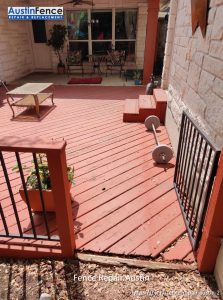
Four climate factors do most of the work in turning small fence issues into urgent ones around Austin:
- Clay soil movement. Austin’s expansive clay swells when wet and shrinks when dry. Posts shift and lean, and the more a post leans, the more strain it puts on its neighbors. See How Soil Type Affects Fence Installation in Austin.
- Intense summer heat. UV exposure warps vinyl and dries out wood, making boards prone to cracking and splitting.
- Heavy rain and humidity. Moisture accelerates rot in wood, rust on metal, and mold in gaps and joints.
- Storm season. A single severe storm can take a barely-leaning post and snap it off entirely. See Storm-Damaged Fences in Austin: Repair or Replace?.
Even a routine wood fence repair can become urgent after one bad storm season. For the broader climate-driven problems, see Common Fence Repair Problems in Austin’s Climate.
How delays compound: a typical timeline
Here’s the pattern most delayed fence repairs follow in Austin. The numbers are general but the trajectory is consistent:
Time elapsed | What’s happening |
|---|---|
Day 1 | A single post starts leaning after a spring storm. Repair at this stage: typically $150 to $250. |
Months 1 to 3 | The lean worsens. Adjacent panels are pulled out of alignment. Two posts now compromised. Repair scope doubles. |
Months 4 to 6 | Heavy rains pool at the leaning post bases. Two more posts begin rotting. Panel sag becomes visible from the street. |
Month 7+ | Gate alignment fails. 30 percent or more of the fence is unstable. Repair estimate now in the $2,000 to $2,500 range, with a recommendation to replace the full run within two years. |
The lesson: small repairs caught at Day 1 stay small. The same damage at Month 7 has compounded into a project several times the original cost.
Detailed cost breakdown by fence type
Costs vary by material, fence length, and complexity. The ranges below are typical for residential fences in Austin and assume a single section is being repaired.
Fence type | Early repair (per section) | Delayed repair (per section) | Full replacement (per linear foot) |
|---|---|---|---|
Wood | $150 to $300 | $800 to $1,200 | $25 to $40 |
Vinyl | $200 to $350 | $1,000 to $1,500 | $30 to $50 |
Chain link | $120 to $250 | $600 to $900 | $15 to $30 |
Wrought iron | $250 to $400 | $1,200 to $2,000 | $40 to $70 |
For broader replacement cost context, see Fence Replacement Costs in Austin.
When fence repair turns into full replacement
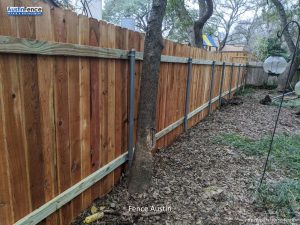
There’s a tipping point where repair stops making financial sense. Most contractors flag a fence for replacement when:
- More than 25 to 30 percent of the fence has structural damage.
- Posts are failing in multiple sections rather than one isolated spot.
- Materials have aged past their normal lifespan and damage is accelerating.
- Repair costs over the past year are approaching 50 percent of full replacement cost.
At that stage, repair work typically buys you another year or two at most. For the full breakdown of replacement signs, see 9 Signs You Need Fence Replacement.
Seasonal fence care checklist for Austin
Most delayed-repair scenarios start with a missed inspection. A 15-minute walk-around four times a year catches small problems while they’re still small.
Spring (March to May)
- Inspect for damage from winter storms and any extended freezes.
- Tighten loose fasteners and gate hinges.
- Treat wood fences with sealant before the rainy season hits.
Summer (June to August)
- Check vinyl panels for warping or brittleness from UV exposure.
- Trim vegetation back from the fence line to allow airflow and prevent rot.
- Inspect metal fences for early rust spots and touch up with paint.
Fall (September to November)
- Inspect after heavy rains for new leaning posts.
- Clear leaves and debris from the fence line and post bases.
- Apply a final wood sealer before winter.
Winter (December to February)
- Check for water pooling at post bases.
- Inspect gates for swelling or sticking.
- Address any storm damage promptly. Don’t wait for spring.