
How Austin’s Climate Affects Fences

Austin experiences a mix of extreme weather conditions that can take a toll on fences:
- Heat: Prolonged sun exposure can dry out wood, leading to cracking and fading.
- Rain and Humidity: Moisture encourages wood rot and rust on metal fences.
- Freezing Temperatures: Although rare, sudden freezes can cause soil shifts and loosen fence posts.
- High Winds: Storms and strong gusts can misalign panels or bring down entire sections of the roof.
These environmental factors mean Austin homeowners must be proactive with fence care to avoid significant repairs.
Common Fence Repair Problems in Austin
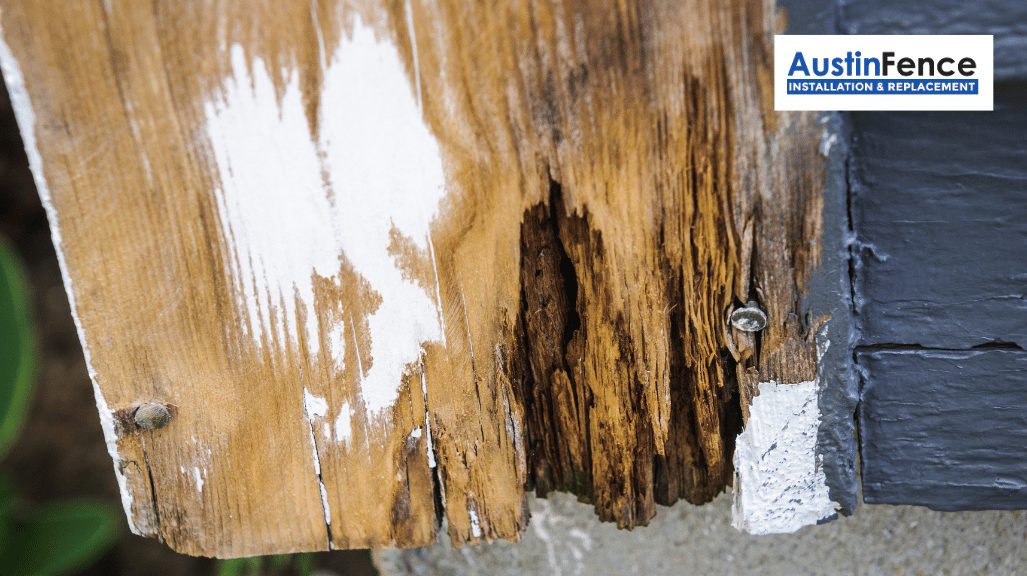
Wood Rot and Decay
Wood fences are particularly vulnerable to Austin’s humid conditions and periodic rainfall.
Signs of Rot:
- Soft, discolored boards
- Foul odor from decayed wood
- Crumbling or splintering areas
Prevention Tips:
- Use pressure-treated lumber.
- Apply water-resistant stains or sealants every year.
- Keep soil and vegetation at least 1 foot away from the base of the fence.
Warping and Splitting
High heat and rapid temperature changes in Austin cause wood boards to expand and contract, leading to warping or splitting.
Prevention Tips:
- Space boards properly during installation to allow natural expansion.
- Apply UV-resistant sealants to reduce sun damage.
- Schedule seasonal inspections to catch early signs of warping.
Rust and Corrosion
Metal fences, including iron and chain link, are prone to rust due to Austin’s rainy seasons and fluctuating humidity levels.
Prevention Tips:
- Apply anti-rust coatings or paint every few years to prevent rust.
- Inspect welds and joints regularly for signs of wear.
- Eliminate standing water near metal fence posts.
Loose or Leaning Posts
Austin’s clay-heavy soil expands when wet and contracts when dry, causing fence posts to loosen or tilt.
Prevention Tips:
- Set posts in deep concrete footings for added stability.
- Ensure proper drainage around the fence line.
- Check post alignment periodically and make adjustments as needed.
Wind and Storm Damage
Occasional high winds and severe storms can knock down fence panels or cause structural damage.
Prevention Tips:
- Install reinforced posts and heavy-duty brackets.
- Trim nearby trees to prevent branches from falling onto the fence.
- Inspect and repair minor damage immediately after storms.
How Austin’s Soil Conditions Worsen Fence Damage

Beyond weather, Austin’s soil composition plays a critical role in fence maintenance.
- Clay Soil Expansion: In rainy periods, clay absorbs water and expands, pushing against posts and destabilizing fences.
- Dry Season Contraction: During summer droughts, soil contracts, leaving gaps around posts that reduce stability.
- Erosion: In sloped areas or zones with poor drainage, soil erosion can undermine the fence’s base.
Pro Tip: Adding gravel or concrete around posts can reduce soil-related shifting and extend the life of your fence.
Seasonal Fence Maintenance Checklist
A year-round maintenance routine is essential to minimize repairs:
Spring
- Inspect for winter damage.
- Reseal or repaint wood fences.
- Tighten loose screws or nails.
Summer
- Check for sun damage or warping.
- Trim vegetation touching the fence.
- Ensure sprinklers aren’t soaking fence boards.
Fall
- Inspect for rust and repaint metal fences if needed.
- Check post alignment before the rainy season begins.
- Clear debris from fence lines.
Winter
- Remove fallen leaves to prevent moisture buildup.
- Check concrete footings for cracks.
- Plan early repairs before spring growth begins.
How to Prevent Fence Damage
Prevention is the key to avoiding costly repairs in Austin:
- Use quality materials: Invest in treated wood or powder-coated metal fences.
- Apply protective coatings: Stain or paint regularly to protect against the weather.
- Maintain proper drainage: Avoid water pooling at the base of the fence.
- Perform routine inspections: Address minor issues before they escalate into more significant problems.
- Hire professionals for major work: Expert installation and repairs ensure lasting results.
When to Call a Professional

While minor maintenance can be DIY, call a professional if you notice:
- Significant post leaning
- Large areas of rot or rust
- Panels or sections falling apart.
- Repeated storm damage
- HOA compliance or code issues
Experts possess the necessary tools and expertise to address structural issues and prevent future damage quickly.